Introduction
Most buyers start pricing a tension fabric building by square footage, then hit a stumbling block when questions about span, frame material, or permits come up. Making those decisions before requesting a quote saves time and rework. Here’s what to check on fabric covered buildings before committing to a manufacturer.
Key Takeaways
- Application drives frame type, fabric grade, and site prep, so start there before pricing by square footage.
- Clear span design removes interior columns and opens up floor space, but frame material is what determines how large a span you can actually get.
- Wind and snow loads are engineered per project, so don’t rely on a generic spec sheet.
- Foundation type depends on the structure’s classification and local soil conditions, and permitting requirements vary by jurisdiction, so check with the local building department early to avoid delays.
- Compare manufacturers on value and certified materials.
Start By Defining How the Building Will Actually Be Used
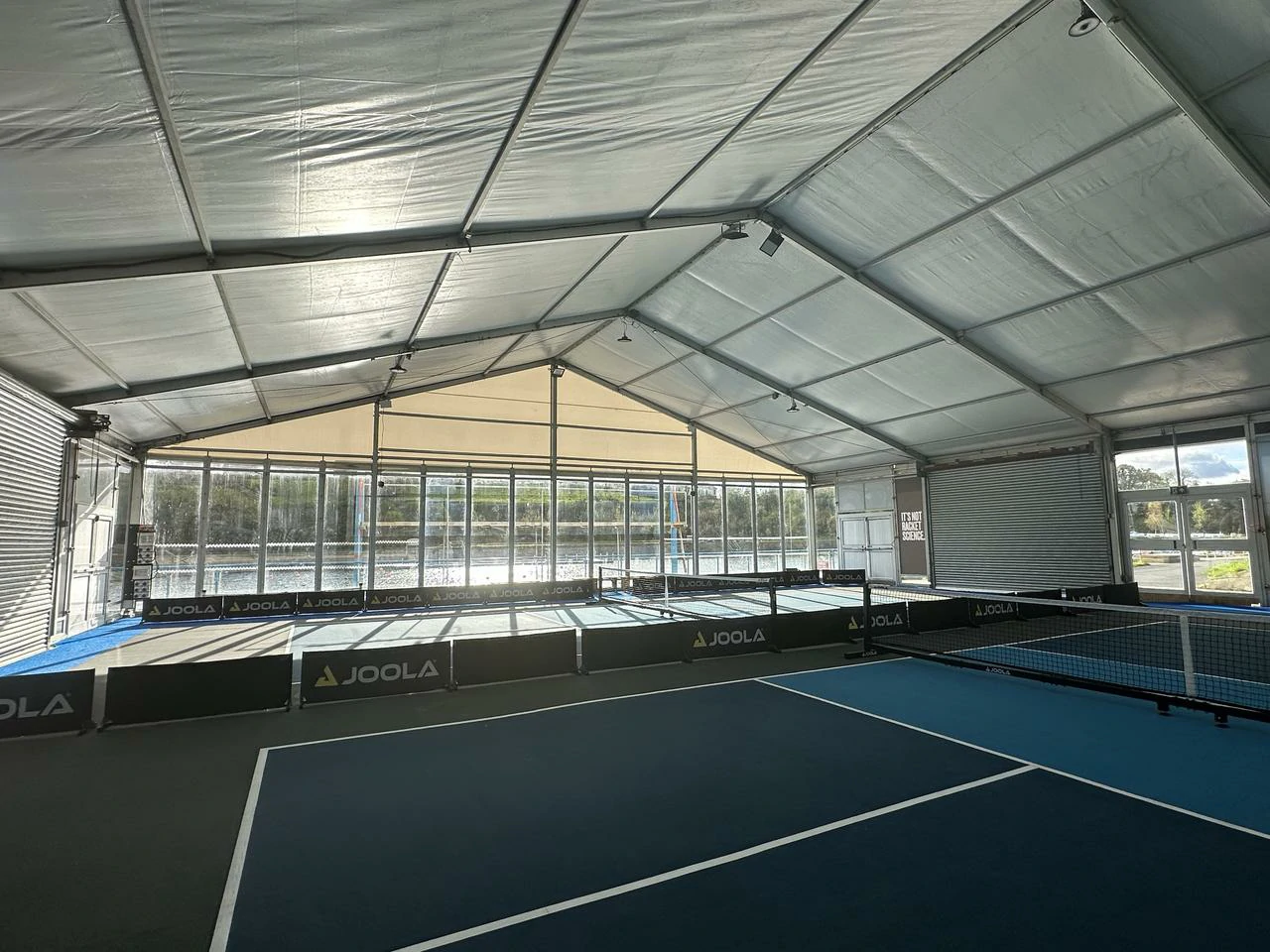
Application should drive every decision. A structure for equipment or agricultural storage needs a different frame, fabric, and door setup than one for a sports court or workshop. An aircraft hangar changes the equation again, since door height and clearance take priority over almost everything else.
For equipment and agricultural storage, vehicles and large machinery need enough room to enter, turn, and move around. Hoop buildings and warehouse-style clear span tents keep the floor free of interior columns, making better use of the available space.
Before comparing quotes, note how the space will be used day to day: vehicle access, storage height, and whether climate control or built-in lighting will be needed.
Span, Frame Material, and Fabric Grade: What to Check First
Span, strength requirements, and expected use all factor into frame material choice. Steel handles the largest, highest-load spans where raw strength matters most, while aluminum suits long-term or frequent-use structures because of its natural corrosion resistance. Confirm which material fits your project with the manufacturer before settling on one.
Fabric grade matters just as much as the frame. PVC-coated polyester is the most common membrane for tension fabric structures, valued for durability and weather resistance, while lighter polyester blends suit shorter-term projects. An ETFE film layer suits enclosed spaces needing natural light without windows, though it’s typically reserved for larger architectural spans.
Fabric structures span a wide range of uses, from short-term event coverage to permanent industrial buildings, and membrane specs vary accordingly. A short-term event canopy can get by with a lighter, uncoated fabric, while a permanent industrial building calls for heavier PVC-coated fabric with UV stabilizers and fire-retardant treatment built to hold up outdoors for years.
Engineering for Wind, Snow, and Site Conditions
Don’t accept a single wind or snow rating as universal. Load requirements are engineered per project, based on the site’s location, elevation, and local building code, so the numbers on a quote should reflect the actual address, not a generic catalog figure. In the US, those design loads generally trace back to the ASCE 7 structural loading standard, which most local codes reference directly.
Fire safety matters too, especially for structures open to the public or near flammable materials. Look for a recognized fire-retardant certification on the fabric membrane, such as NFPA 701 in the US or DIN 4102 (B1) in Europe. A fabric isn’t fire-retardant just because it looks similar to one that’s been tested.
Foundation, Codes, and Permits
Foundation needs depend on the structure’s classification and expected lifespan, and site soil conditions. A temporary structure might sit on a ballast or ground-anchor system, while a semi-permanent or permanent building typically needs a concrete slab foundation. Check with the local building department early, since permitting varies by jurisdiction, and skipping this step is a common reason projects stall on site.
Accessories and Interior Fit-Out Worth Planning For
Doors and walls change both cost and usability, and flooring needs the same upfront thought. A roll-up or personnel tent door suits frequent equipment access, while a hardwall system adds insulation and a finished interior for offices. Interior lighting and HVAC are also worth planning upfront, along with drainage if the floor will see heavy use, since retrofitting later usually costs more.
Cost, Installation, and Choosing the Right Manufacturer
Cost comparisons should look past the number on a quote to the value and engineering behind it. Shelter Structures handles design and fabrication in-house, plus installation using its own crews, which keeps production efficient without cutting corners on certified materials.
Material choice matters here because components age at different rates, and fabric building lifespan varies accordingly: aluminum frames last around 20 years, galvanized steel up to 10 years with maintenance, and PVC fabric closer to 5 years depending on exposure. Those differences affect total cost more than a small gap in the upfront quote.
When comparing quotes, look for the same standards: in-house engineering support and certified materials, with ISO 9001 for quality management as a reasonable baseline. Installation should be handled directly by trained crews on the manufacturer’s own payroll. Lead times vary by order size and season, so ask for a project-specific timeline.
Frequently Asked Questions
What Is the Difference Between a Fabric Covered Building and a Steel Building?
A fabric covered building uses a steel or aluminum frame with a tensioned fabric membrane instead of solid metal panels, making it lighter, faster to install, and better suited to natural light. A steel building relies on rigid panels, meaning more weight and a higher foundation load.
How Long Does a Fabric Covered Building Last?
What Are the Downsides of Fabric Structures?
Like any building type, fabric structures have a few trade-offs. Membranes typically need replacement sooner than a steel or masonry exterior, though certified fabric grades are built for years of reliable service. Wind and snow ratings also need to be verified per project, since fabric structures are engineered individually for each site.
What Are Fabric Buildings Called?
Fabric buildings go by several names, including tension fabric structures, fabric covered buildings, membrane structures, and clear span structures. The terms mostly overlap, though “clear span” specifically refers to the column-free interior design common to this building type.
What Is the Typical Cost Per Square Foot for a Fabric Building?
Cost per square foot varies with span, frame material, fabric grade, and accessories like doors or climate control. Request a project-specific quote once you’ve defined use case, span, and site conditions, since those factors affect price more than square footage alone.
The Right Tension Fabric Building Protects Your Investment for the Long Term
Getting span, materials, engineering, and permitting right before requesting a quote separates a building that fits the project from one that needs costly changes later. If you’re looking at options for storage or agricultural space, or something more industrial in scope, contact Shelter Structures to talk through a hoop building or another structure suited to your site.