Strong winds, snowfall, scorching heat, and heavy rains are natural elements that make it difficult to live or host events outdoors. Fortunately, waterproof tents can protect us from these elements and allow us to enjoy outdoor events while keeping us comfortable and out of danger.
You may be confused about the terms related to water protection: What do water resistant vs waterproof mean?
This article explains the difference and helps users pick the right option.
What is the Difference between Water Resistant and Waterproof?
Water-resistant structures are designed to repel water for a while, and this can typically be achieved using special coating or tightly woven fabric. When comparing water-resistant vs. waterproof levels, water-resistant provides the least protection since it only provides partial protection.
On the other hand, waterproof structures offer a 100% protective barrier and entirely block external water and moisture. These materials typically have waterproof coatings that allow them to handle prolonged and heavy exposure to water without allowing it in.
The difference boils down to one providing complete protection and the other providing protection for short periods or minimal water exposure only.
One of the most common tests for determining water-resistant vs. waterproof levels is the hydrostatic head test, which involves exposure to pressurized water. During the test, a fabric is subjected to increasing water pressure until it starts to leak, and the water levels are recorded. The higher the rating, the better the water-resistant vs. waterproof level.
All Shelter Structures products are waterproof, strong, and easy to set up. The company provides translucent or opaque PVC covers, using the latest in low-wick and flame retardant materials.
How Do Structures Become Waterproof?
The first step in making a waterproof fabric is picking a suitable material and adding a waterproof coating to it. Polyester and nylon are commonly used because they are durable and lightweight, but other options include silicone elastomer, polyurethane (PU), and polyvinyl chloride (PVC).
PVC is polymerized from vinyl chloride monomer and has excellent mechanical properties and chemical resistance. It acts as a coating layer, providing protection features like fire retardancy and waterproofness.
After coating, the material becomes an impenetrable barrier that keeps water from seeping. Since the coatings are usually rubber-like substances, waterproof materials tend to be stiffer.
How Do Structures Become Water-Resistant?
One way of creating water-resistant fabrics is by using tight, dense weave structures that liquid molecules cannot penetrate easily.
Blended fabrics are also a thing. For example, cotton-polyester blends provide breathability alongside some water resistance. The level of water resistance can also be finely adjusted through weave design, fiber selection, and material construction.
Another option is applying polymer coatings and treatments, which modify the surface chemistry of the fabrics to make them hydrophobic or water-repellent. Some common polymers that can be used include silicone, polyurethane, and Teflon.
When comparing water-resistant vs. waterproof fabrics, water-resistant materials tend to be more lightweight.
Water Resistant vs. Waterproof: When Are They Appropriate?
If you want participants and attendees to stay completely dry, waterproof is the best choice. Typically, waterproof tents will feature a higher hydrostatic head rating and multi-layered fabrics, which makes them ideal for long-term or permanent use.
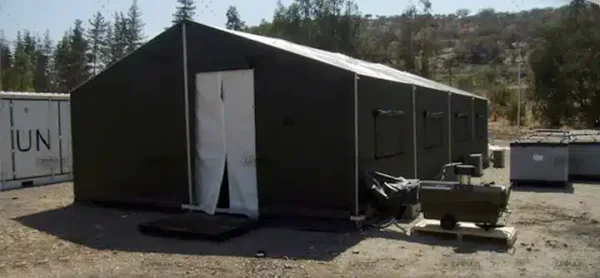
Shelter Structures’ waterproof tents use industrial-grade PVC-coated fabric that prevents water from seeping in. They efficiently act as reliable shelters for light armored vehicles, army troops, and military equipment. They also serve those in recreational domains, emergency response, and commercial settings.
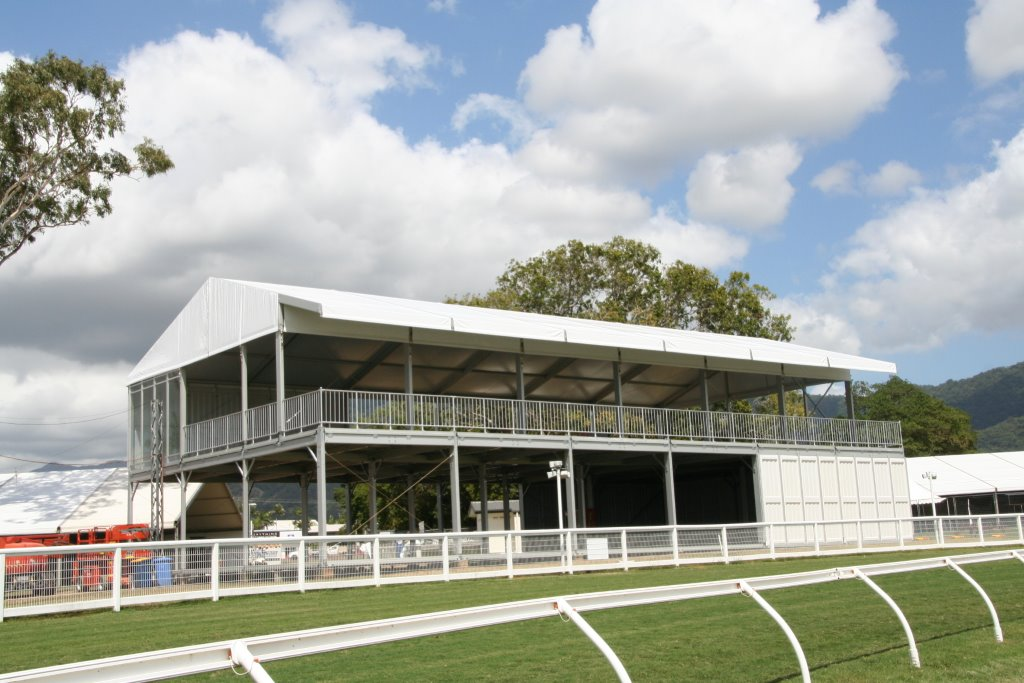
Water-resistant tents are ideal for short-term or temporary use, like temporary events or exhibition scenarios. They are not suited to long-term use because they cannot resist prolonged exposure to moisture and water.
Water-resistant tents can be used for compact stalls or intimate gatherings. Most components within the small party tents are interchangeable and offer flexibility for event organizers and vendors.
When deciding which one to pick, a user must first understand the level of water protection and whether it’s in line with the intended use. Below, we have listed some of the best-rated waterproof tents to help you decide.
Examining the Best-Rated Waterproof Tents
Shelter Structures sells the best-rated waterproof tents worldwide. Its tents use thick (over 0.65 millimeters) PVC double-coated polyester that is durable, waterproof, and fire-retardant.
With a durable, high-quality PVC fabric cover, the high-strength aluminum frame can withstand wind loads of up to 120km/h and has a service life of over 20 years.
Shelter Structures C Series Temporary Tent

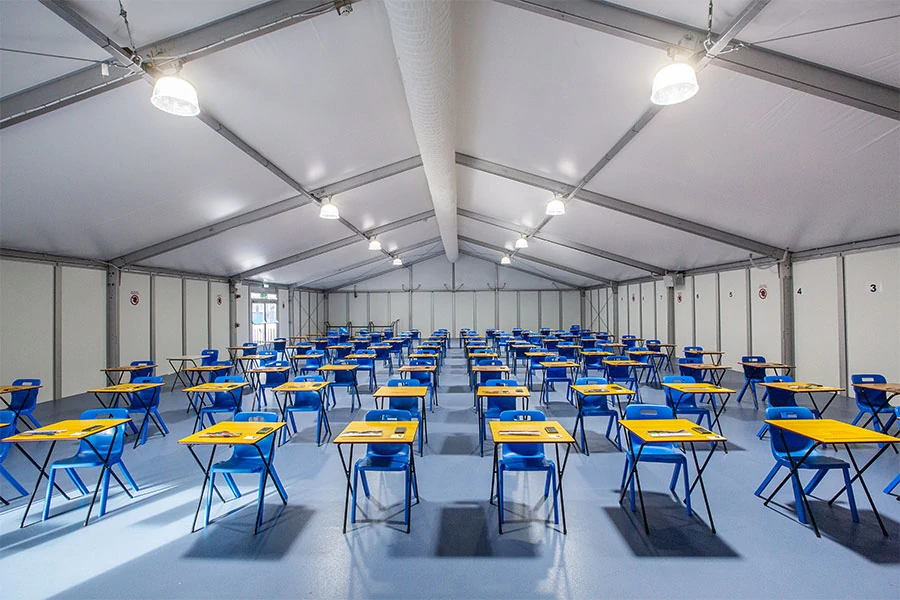
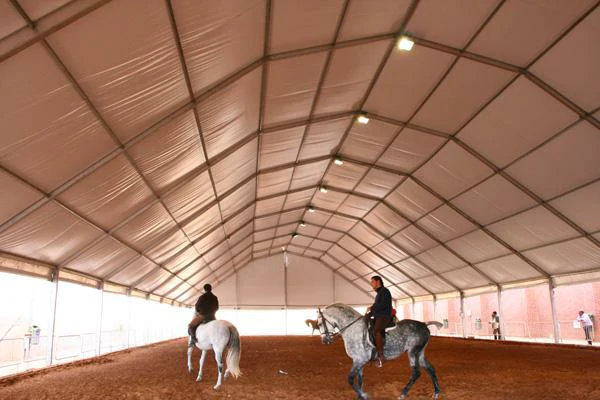
C series waterproof tents can accommodate large crowds and are perfect for outdoor dining and activity-based events like workshops.
Their roof options include 850GSM opaque PVC and 950GSM transparent PVC, while wall and gable options include translucent and transparent PVC, transparent glass walls, and PVC french windows.
Arcum Series Party and Event Tents

Arcum series tents are the best-rated waterproof tents for parties and events. They have several roof options, including 850GSM opaque PVC and 950GSM transparent PVC
They serve cultural festivals, outdoor weddings, get-togethers, and business events. Their inclined roof prevents rainwater accumulation and leakage after continuous rainfall.
Flysheet Army Tents
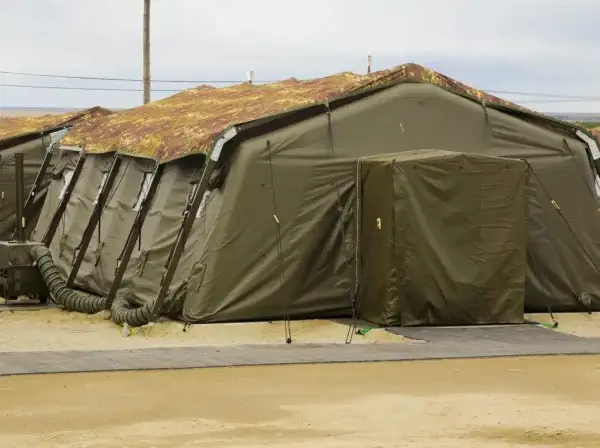
Flysheet army tents can be used as military medical centers, control centers, and accommodation.
Their wall options include 750GSM PVC fabric, and all covers are made of double-coated PVC fabric. The tents have a snow load of up to 0.3 KN/m2 and a maximum wind load of up to 100 km/h.
Polygonal Clamshell PVC Tent
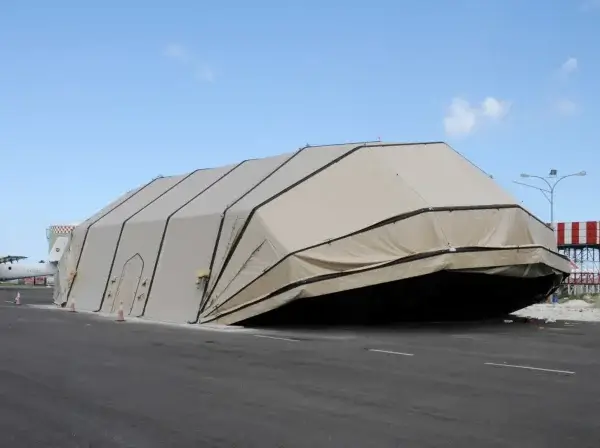
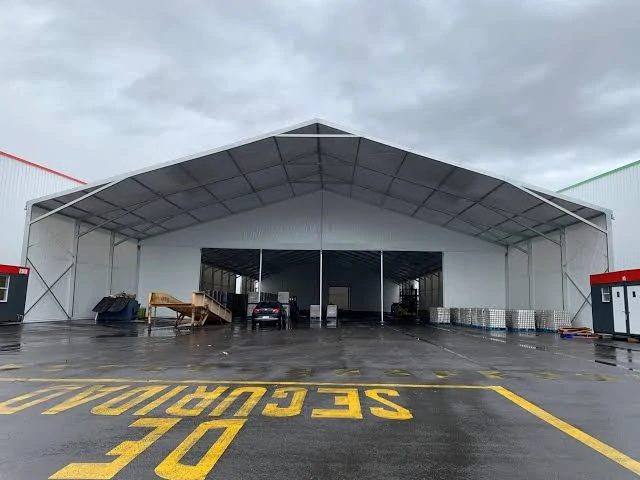
Polygonal Clamshell PVC tents are mainly designed for military hangars or equipment storage, but their usage broadens to housing light armored vehicles and military equipment, with walls made of 850GSM PVC fabric. Their modular nature and extreme weather resistance make them perfect for these military applications.
Glamping Dome

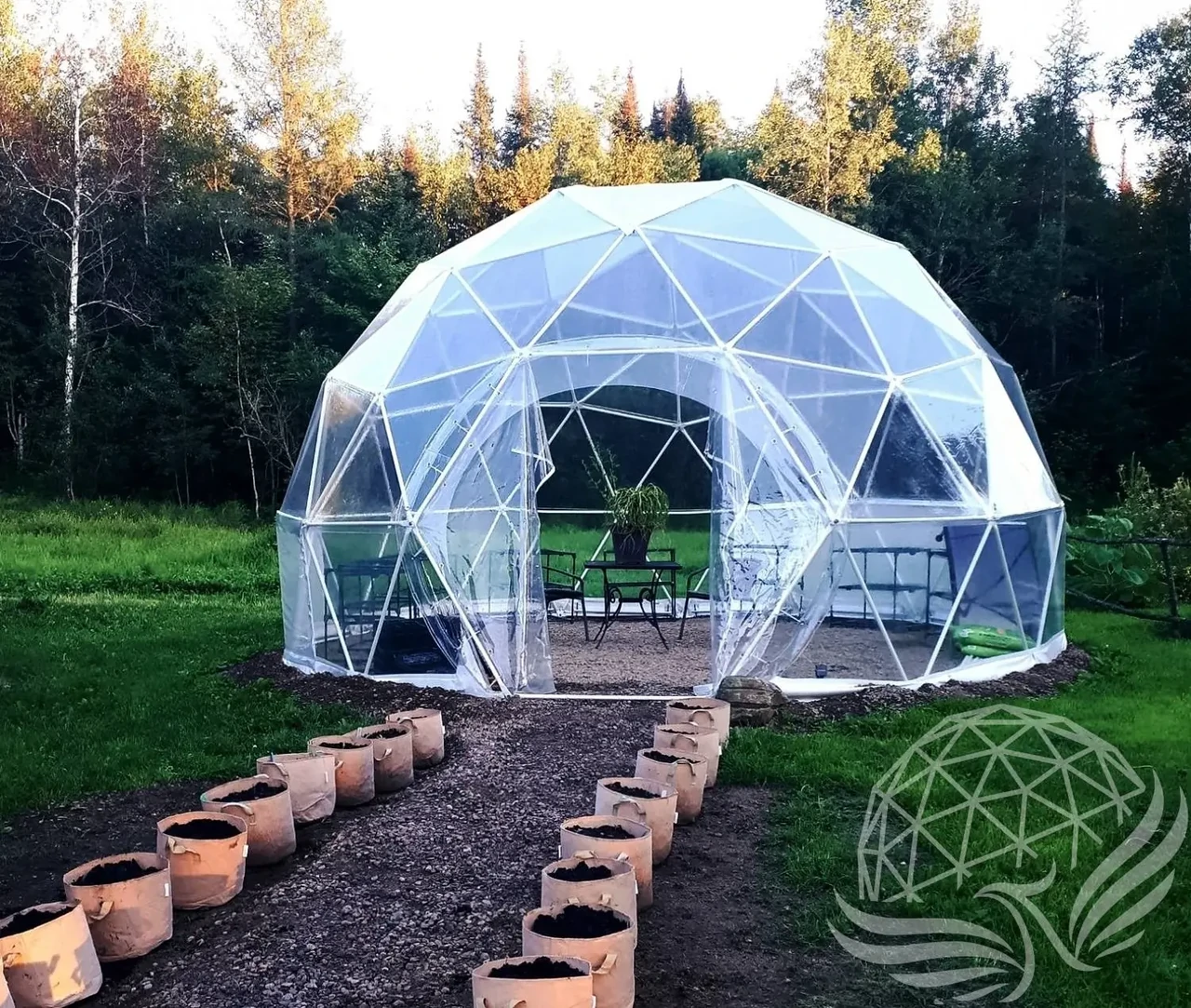
The glamping domes can be used for horticultural projects, permanent residences, and luxurious accommodations.
They use PVC-coated polyester fabric with a cover membrane of either 850g/sqm full opaque PVC fabric or 950g/sqm transparent PVC. We can also provide tempered glass or polycarbonate panels. They have a maximum wind load of 100km/h and a snow load of 0.5 kn/m2.
Dome Field Army Tent
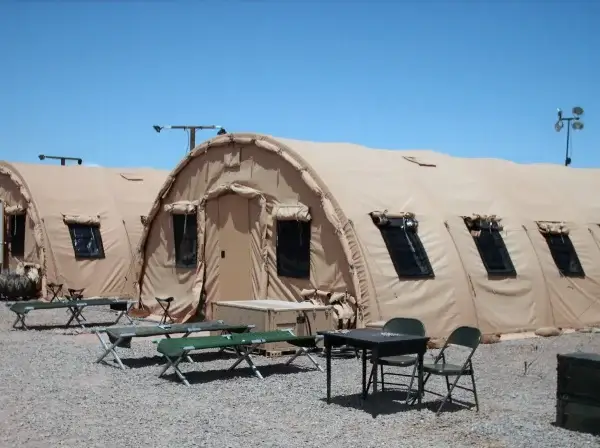
Dome Field army tents are used in emergency response scenarios, command hubs, and recreational spaces.
Their wall option is 500GSM PVC fabric, and they have a snow load of 0.1kN/m2 and a maximum wind load of 100km/h. They can be deployed swiftly and are perfect for instant command center establishment.
Classic Atrium Tent

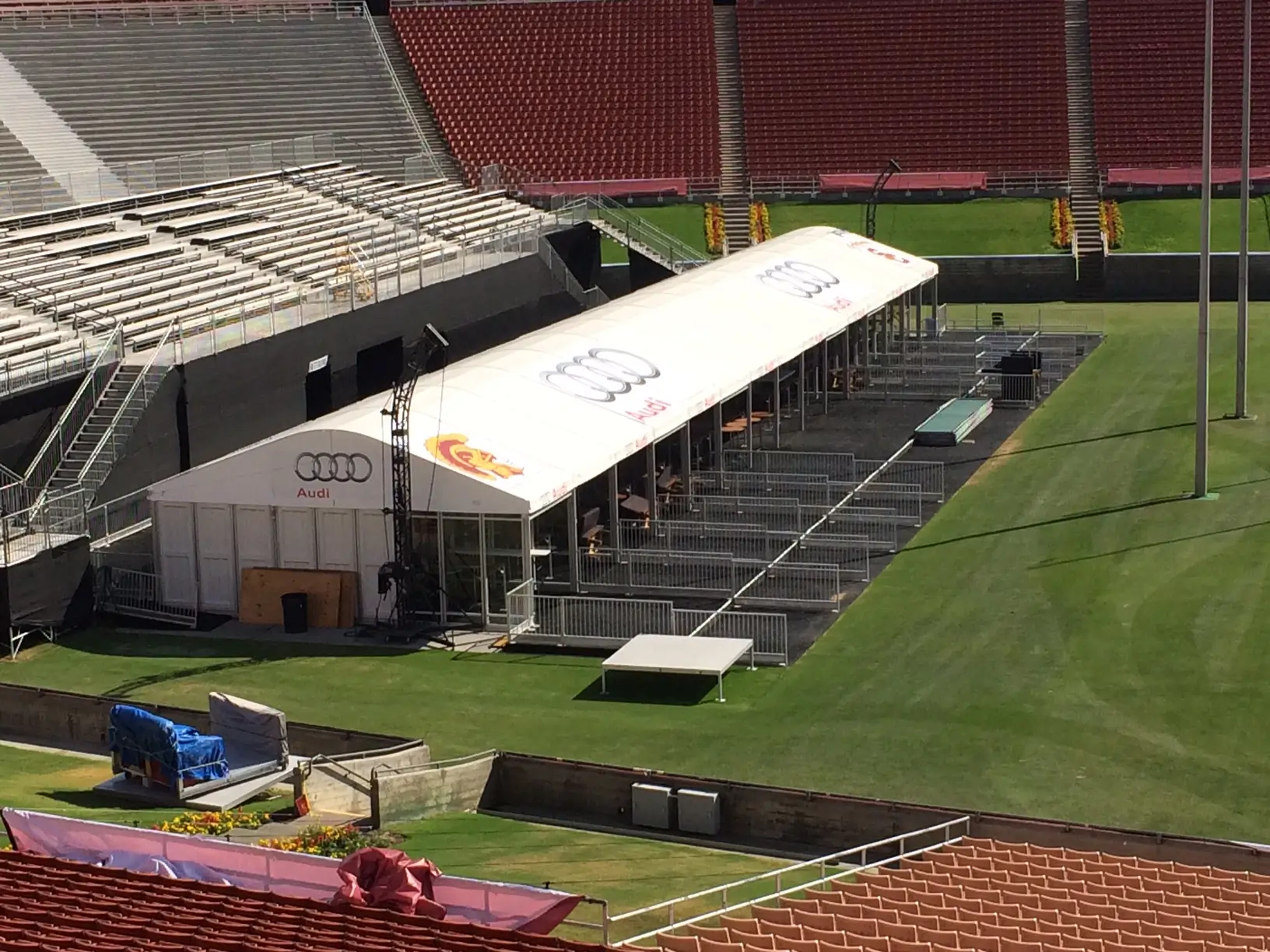
Classic atrium tents are perfect for enduring events such as corporate gatherings and festivals. They provide extensive customization options for accessories, sizes, and wall types.
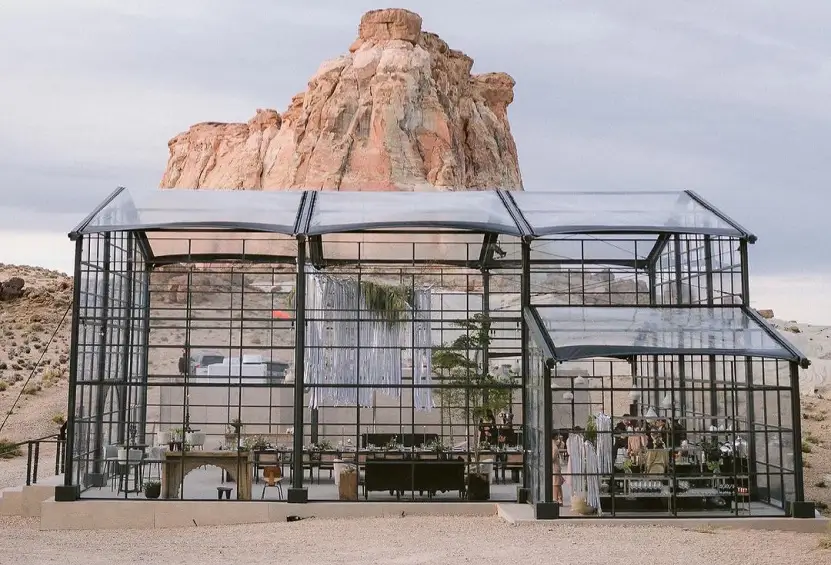
The roof options include 950GSM transparent PVC, while the wall and gable options are 950GSM transparent PVC, horizontal glass, and vertical glass
Shelter A-frame Party Tent and Industrial Tents

A-frame party and industrial tents can be used for parties, weddings, and building workshops.
Roof options include 850 GMS opaque PVC, and 950GSM transparent PVC. Wall and gable options include steel cladding, sandwich panel,, transparent glass wall, 650GSM translucent PVC, 850GSM opaque PVC, and 950GSM transparent PVC.
TFS Series Army Tent

TFS Series army tents can be used in campaigns, festivals, trade shows, army base camps, and weddings. Their roof options include 850GSM opaque PVC and 950GSM transparent PVC.
These tents are curved like peaches and have pointed roofs, thus preventing snow and rain from accumulating.
Conclusion
The difference between water-resistant and waterproof is that while waterproof will keep out water completely, water-resistant will keep out water for a short period before it gets in.
For this reason, waterproof tents are ideal for long-term or permanent use, while water-resistant tents are perfect for short-term or temporary use. Check out our selections at Shelter Structures for the best-rated waterproof tents. The company can provide space solutions for all types of space scenarios and events.