Introduction
A fabric structure that’s too cold in January or too hot in July usually comes down to one thing: no real fabric building insulation plan. The real question isn’t whether to insulate, but rather which system fits the span, the climate, and how the space gets used. This guide covers the main options, what drives cost, and when to plan for it.
Key Takeaways
- Insulation affects year-round usability and energy costs, not just extreme-day comfort.
- The four main system types (liners, spray foam, batt, sandwich panels) fit different shapes and budgets.
- Insulated sandwich panels only work on flat surfaces, suited to industrial buildings, not curved-roof tents.
- Cost depends on span, climate, and system type more than material price alone.
- Insulating at the design stage is simpler and more cost-effective than retrofitting later.
Why Insulate a Fabric Structure?
A fabric membrane alone does little to slow heat transfer, so indoor temperatures track the outdoor climate closely — fine for short-term storage, but a problem for spaces where people work, animals live, or temperature-sensitive materials get stored.
Insulation slows that heat exchange, keeping heating and cooling equipment from running constantly and cutting long-term energy costs. It also manages condensation, since an insulated membrane narrows the temperature gap where moisture collects. Without it, a building’s usable season is limited to whatever the local climate allows.
Fabric Building Insulation Options
Several systems are built specifically for tension fabric structures, and each one fits a different combination of budget, climate, and building shape.
Insulation is typically specified alongside other customizable elements (span, wall system, accessories) rather than chosen in isolation.
| System | Best-Suited Structure Shape | Relative Cost | Relative R-Value | Retrofit-Friendly |
|---|---|---|---|---|
| Insulated Liners / Reflective Double-Membrane | Curved-roof (dome, arcum) | Lower upfront cost | Moderate | Yes: Common retrofit option |
| Spray Foam | Any shape, best for permanent use | Higher upfront cost | Strong per inch | Limited: More involved to retrofit |
| Batt / Needle-Punched | Curved-roof (dome, arcum) | More cost-effective | Lower than spray foam | Yes: Installs into most existing frames |
| Insulated Sandwich Panels | Flat wall/roof only (industrial, warehouse) | Higher upfront cost | Among the highest-performing | Limited: May need frame modifications |
Insulated Liners and Reflective Double-Membrane Systems
A liner adds a second fabric layer beneath the outer membrane, creating an air gap that acts as insulation. Reflective liners go a step further, using a foil-faced material that reflects radiant heat rather than absorbing it.
Liners are the common starting point for curved-roof structures, including pole-free dome and arcum tents. The liner follows the outer membrane’s shape without rigid backing, offering better thermal performance without the cost or weight of a solid panel system.
Spray Foam Insulation
Closed-cell spray foam gets applied directly to the interior of the membrane or frame, expanding to fill gaps and create a continuous insulating layer. It offers a strong R-value per inch and doubles as an air barrier, which helps on both temperature control and moisture management.
Spray foam suits structures with a permanent use case, since it’s applied on-site and isn’t easily removed later. It’s a common fit for workshops, cold storage, and buildings where insulation stays for the structure’s life.
Batt and Needle-Punched Insulation
Insulated Sandwich Panels
Sandwich panels use a rigid insulating core, often foam, between two metal or composite skins, delivering strong thermal performance and a finished interior look closer to a conventional building than a fabric one.
Sandwich panels only apply to flat wall or roof surfaces, limiting them to industrial and warehouse-style structures rather than curved-roof products like arcum or dome tents. For a rectangular building with flat walls, they’re among the highest-performing insulation options available.
Which Applications Benefit Most From an Insulated Structure?
Some applications need insulation to function at all; others benefit from it but can operate without it.
- Cold storage and refrigerated warehousing: Temperature control is the entire purpose of the building.
- Workshops and manufacturing space: Needed whenever the work involves people onsite for full shifts, temperature-sensitive equipment, or materials that can’t tolerate condensation.
- Livestock and agricultural buildings: Supports animal welfare and reduces condensation dripping onto feed or bedding.
- Military and emergency shelter applications: Often specify insulation for personnel comfort and equipment protection in extreme climates.
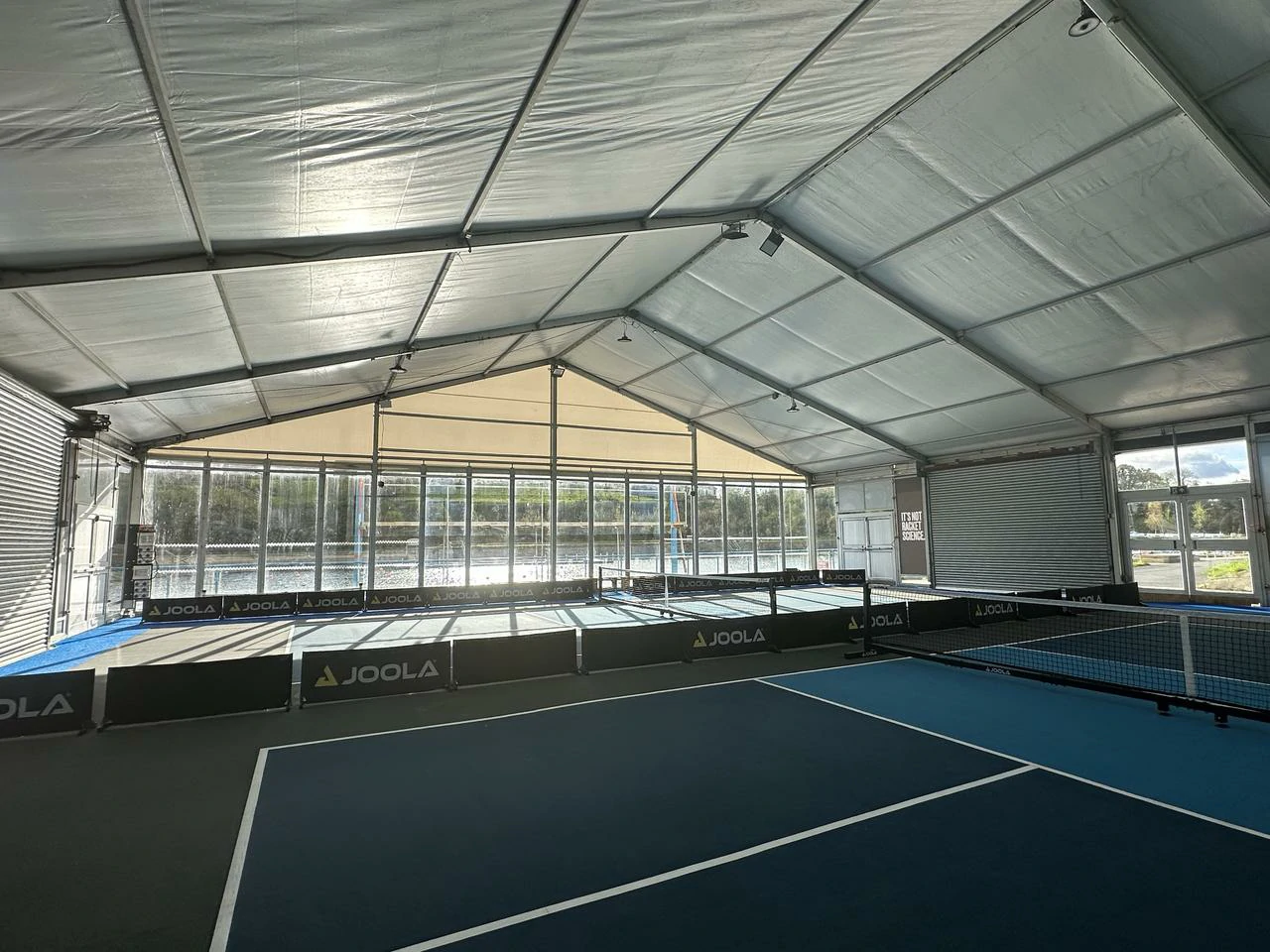
- Sports domes and recreation facilities: Keeps courts and fields usable across more of the year, extending the structure’s return.
Retrofitting an existing fabric building with insulation is also common when the building’s use changes over time, such as a storage structure that gets converted into workspace.
These extreme-climate use cases aren’t just theoretical. For a mining storage structure in Chile, Shelter Structures specified a double-layer PVC roof system with fully enclosed wall panels to manage temperature and moisture around the stored vehicles and equipment.
Planning for Insulation: New Build vs. Retrofit
Insulating at the design stage is generally more cost-effective and simpler, since the frame, liner attachment points, and ventilation can be specified around the system from the start rather than layered on later.
Retrofitting is entirely possible and common, particularly with liner or needle-punched systems, which install into most existing frames without major changes. Spray foam and sandwich panels are more involved, often requiring frame modifications.
Either path works, but a structure built around the right type of fabric building (with insulation planned in from the start) tends to perform more predictably than one adapted after the fact.
What Affects the Cost of Insulating a Fabric Building?
Insulation cost scales with several factors working together rather than any single line item.
- Target R-value: A building that only needs to take the edge off winter cold costs less to insulate than one that needs to hold a tight temperature range year-round.
- Structure size and span: A larger surface area needs more material regardless of system type.
- System type: Liners and needle-punched insulation make more practical use of material and labor for a given thermal target; spray foam and sandwich panels cost more upfront but can offer stronger long-term performance.
- Climate: A structure in a severe winter climate typically needs a higher R-value than one in a milder region to hit the same comfort target.
- New build vs. retrofit: This changes the cost picture, worth planning for before committing to a system.
Getting this right before committing to a system avoids costly rework later. Shelter Structures can walk through these cost variables for your specific span, climate, and use case.
Frequently Asked Questions
How Do You Insulate a Fabric Building?
Insulation is added through a liner system, spray foam, batt, or needle-punched material, or rigid sandwich panels, depending on the structure’s shape and use. Curved-roof buildings typically use liners or needle-punched insulation; flat-surfaced buildings can also use sandwich panels.
Can You Insulate an Existing Fabric Structure?
Does Insulating a Fabric Structure Prevent Condensation?
Insulation reduces condensation but doesn’t eliminate it alone. Ventilation and humidity control still matter, especially in high-moisture buildings like livestock housing or cold storage.
Is Fabric Building Insulation Worth the Cost?
The Right Insulation System Keeps a Fabric Structure Usable Year-Round
Choosing the right fabric building insulation system, whether that’s liners, spray foam, batt insulation, or sandwich panels, comes down to the structure’s shape, its climate, and how the space gets used. Getting that match right at the planning stage, rather than after the building is up, is what keeps the investment paying off.
It’s also where Shelter Structures’ in-house design and engineering team, backed by worldwide installation, does the most work: matching the system to your climate and application rather than a generic build.
If you’re planning a fabric structure that needs to perform year-round, contact Shelter Structures to talk through the right insulation system for your climate and application.