Introduction
The greenhouse building is often a key part of successful modern year-round cultivation and commercial agricultural deployment. It can help create a stable, growing environment for crops, extend planting seasons, reduce the impact of changing weather conditions, and, most importantly, improve overall productivity.
However, one of the biggest challenges is selecting the perfect solution from numerous options. If you are struggling with this, you’ve come to the right place. In this blog, we’ll share a full guide to this functional structure. From common types to the general cost of greenhouse construction, we’ll get you covered. Read on to choose the most suitable greenhouse building for your project!
Greenhouse Building Basics: What You Need to Know
Greenhouse structures are mainly used to create a relatively stable growing environment for year-round cultivation by controlling temperature, humidity, light, and ventilation. Normally, they can serve a variety of scenarios, including home gardening, commercial farming, research facilities, and specialized crop production.
But different uses require different greenhouse designs. For home gardeners, greenhouses primarily focus on growing vegetables, flowers, or ornamental plants, so cost, ease of setup, and low maintenance are key factors to consider when choosing this structure. In contrast, for a commercial greenhouse, the structural strength, durability, space efficiency, and long-term performance are more important.
Thus, before planning a greenhouse, it’s better to clearly define your growing goals, budget, and intended use, allowing you to choose the right structure and manage costs more effectively.
Common Greenhouse Structures
Geodesic Dome Greenhouse Structures
The geodesic dome is a typical hemispherical greenhouse structure. The unique dome shape ensures greater structural stability under challenging weather conditions. At the same time, its framework consists of multiple interconnected triangular units. This design allows external forces to be distributed evenly across the entire structure, creating an exceptionally strong load-bearing system. Additionally, the rounded exterior can also help reduce wind resistance and allow snow to slide off more easily.

Highlights:
- Strong wind and snow resistance
- Even pressure distribution
- Superior structural strength
- Unique, eye-catching appearance
Best for: Extreme climate regions or commercial and high-end projects that require superior structural performance, weather resistance, and an iconic architectural presence.
Hoop Greenhouses Structures
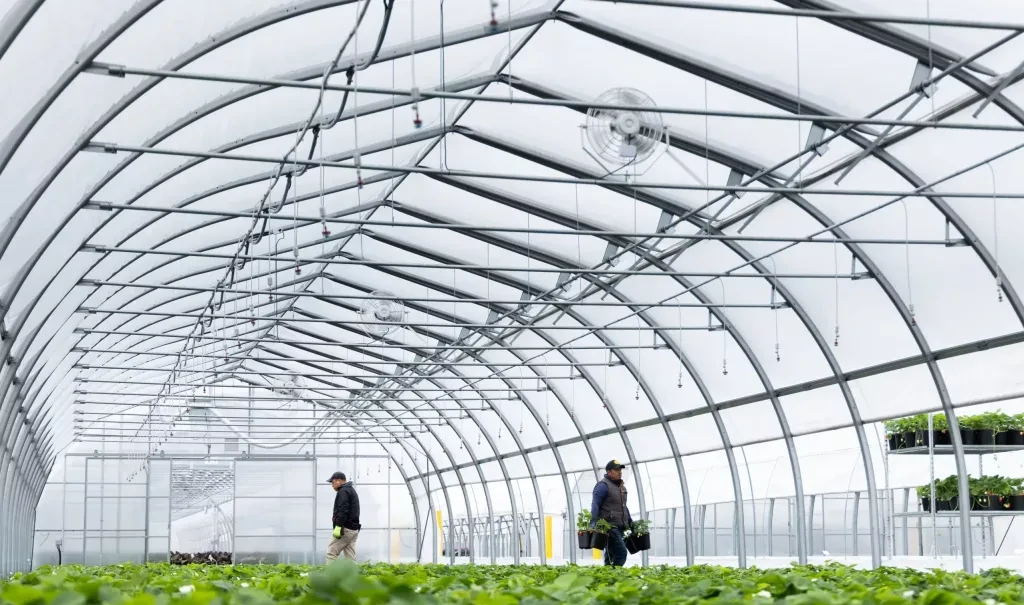
The hoop building can also serve as a greenhouse. It is constructed with a series of curved steel frames that form an arch-shaped framework. The frame is covered with a durable, translucent, and UV-resistant fabric membrane made of 100% weatherproof PVC. This simple yet effective design creates a large enclosed space for crop cultivation, equipment storage, and daily farming operations.

Highlights:
- Highly scalable and expandable
- Low construction and maintenance costs
- Quick installation with a short construction timeline
- Open interior space for mechanized operations
- Versatile for various agricultural applications
Best for: The most common and practical choice for large-scale agricultural operations looking for an economical and highly versatile greenhouse building solution.
A-Frame Greenhouse Structures
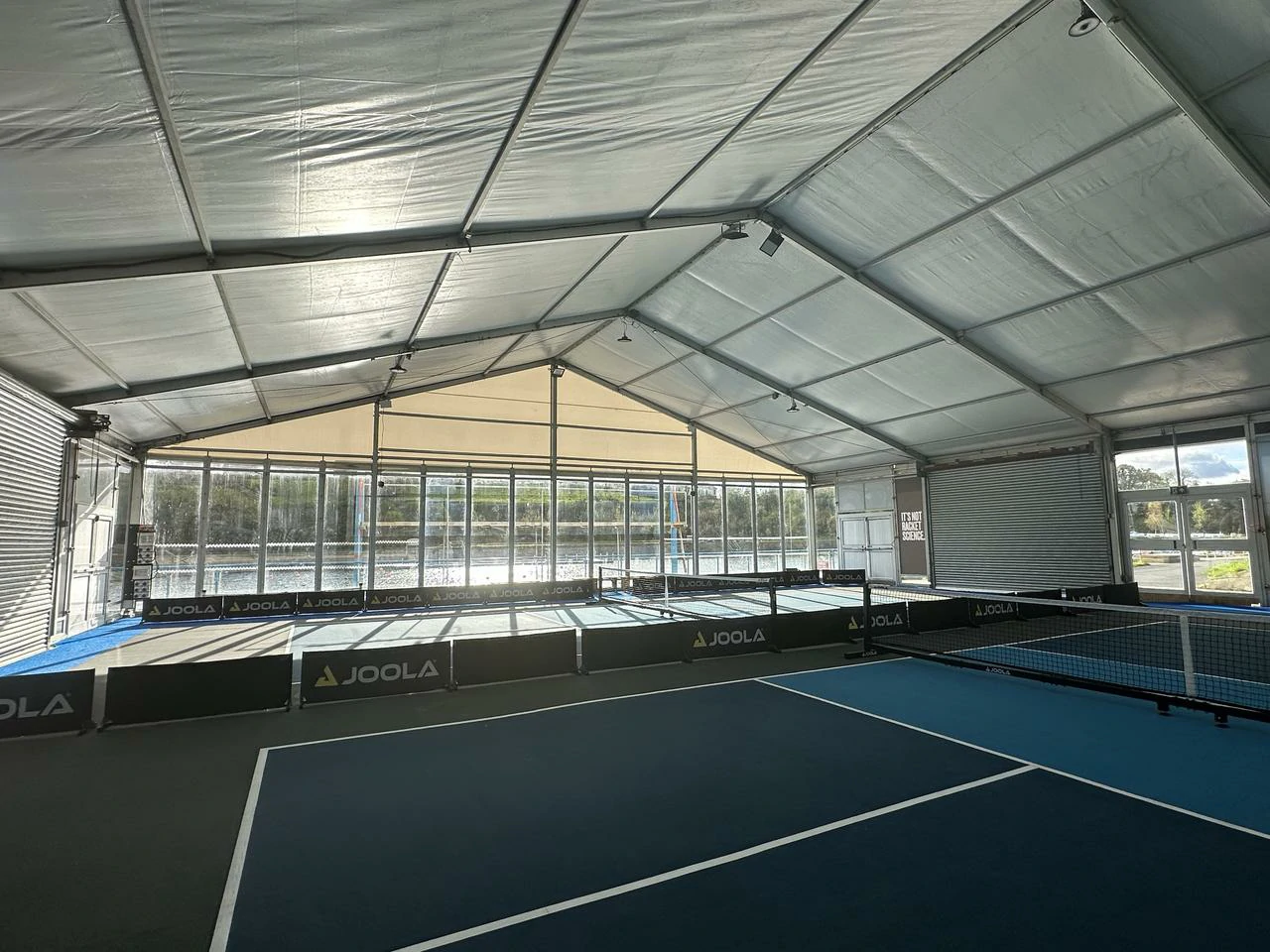
The A-Frame greenhouse structure typically resembles the shape of the letter “A”, with two sloped support frames forming a triangular roof at the top. This structure can greatly enhance overall structural stability. Moreover, due to its simple design, the A-Frame tent structure is straightforward to construct, making it a basic yet still practical greenhouse option for most purposes.

Highlights:
- Efficient heat release via the ridge-top design
- Ridge-top design allows easy heat release
- Strong stability and load-bearing capacity
- Highly straightforward setup and assembly
- Effective rain and snow drainage
Best For: Suitable for small to medium-sized agricultural projects or beginner-level greenhouses, especially for users with a limited budget who still require a stable, reliable growing environment.
Greenhouse Building Materials
In addition to common types, selecting suitable greenhouse building materials also matters. Basically, you’ll need to focus on two parts: the frame and the cover. Each of them can be made from different materials, such as:
Frame Materials
Steel: This is one of the strongest and most widely used greenhouse frame materials, especially in medium to large-scale commercial structures. It offers excellent load-bearing capacity and strong resistance to deformation under wind or snow pressure. With hot-dip galvanization, the steel frame can work very well to withstand corrosion, erosion, and rust.
Aluminum: The lightweight nature of aluminum makes it very easy to install, dismantle, and transport. However, this does not mean it compromises on quality. It is also highly resistant to rust and corrosion, making it a durable and low-maintenance option for greenhouse frames.
Wood: A great advantage of wood is its natural insulation properties, which help improve temperature regulation inside the greenhouse. It can also enhance the overall appearance of the structure, giving it a more natural and visually appealing look. But it often requires regular maintenance to prevent decay, moisture damage, and insect infestation over time.

Covering Materials
Polycarbonate: This material is known for its excellent thermal insulation and high impact resistance, especially for protection against hail damage. It is lightweight, durable, and commonly used in modern commercial greenhouses. With proper installation and maintenance, its lifespan can easily reach 10 to 20 years!
Glass: The transparency feature of glass can maximize plant growth through natural sunlight. But this material is very heavy. So it often requires a strong, heavy-duty frame for proper support. It offers durability and aesthetics, making it ideal for permanent, premium, or exhibition commercial greenhouses with a lifespan that can easily exceed 30 years.
Film: This lightweight material offers excellent flexibility and cost-effectiveness. It is one of the most practical options for temporary, seasonal, or budget-friendly greenhouse setups and is exceptionally easy to replace or upgrade.

How to Build a Greenhouse?
Site Selection and Orientation
When choosing the greenhouse site, prioritize locations with optimal sunlight exposure, effective drainage, and no nearby obstacles like trees or buildings that may block light. Normally, flat or gently sloping land is preferred for stability and water control. As for orientation, aligning the greenhouse ridge north-to-south is generally recommended to maximize even sunlight distribution throughout the day. If site constraints prevent this, alternative solutions such as reflective materials, supplemental grow lights, or optimized plant layout strategies can be deployed to improve light utilization.
Foundation and Ground Preparation
Depending on the terrain, site leveling may be required before installing concrete strip foundations, ground anchors, or ballast weights can all be good options. The final choice depends on the greenhouse structure type and its intended use. For example, lightweight hoop structures or film greenhouses often use ground anchors for flexibility and lower cost, while heavier glass or polycarbonate structures usually require concrete foundations to ensure maximum stability and long-term durability.
Frame Installation
To save time and labor costs, it is recommended to choose a modular prefabricated frame system. This design means that all components are premade in the factory. All you need to do is follow the instructions to connect each part on-site. This highly standardized system makes on-site assembly very simple. For example, if you plan to build a geodesic dome greenhouse, you can efficiently complete the installation by following a technical manual or tutorial video. The pre-engineered parts ensure a secure and rapid setup, even without extensive professional experience.

Covering and Ventilation Setup
Cost to Build a Greenhouse: 3 Core Influencing Factors
The cost to build a greenhouse usually includes various aspects. But the main influencing factors can be broken down into the following three key areas.
Structural Setup and Upfront Cost: Generally, standard hoop greenhouses require the lowest initial purchase and construction cost. So they are often ideal for low-budget expansion. In comparison, geodesic domes or A-frame structures require higher upfront investment. But they can provide large, column-free interior space for flexible layout and better crop management. In addition, their strong wind and snow resistance can significantly reduce potential repair costs after extreme weather events, making them a worthwhile long-term investment.
Membrane Quality and Operating Expense: Low-cost film coverings are more affordable but offer weaker insulation performance and typically need replacement every 3 – 5 years. This naturally adds more hidden expenses over time. In contrast, industrial-grade polymer membranes require a higher initial investment but can last over 15 years. Their excellent thermal insulation also helps reduce energy consumption for heating in winter and cooling in summer, resulting in a higher long-term return on investment.
Modular Assembly and Labor Savings: If you build a permanent greenhouse, you will spend a significant amount of money on labor. A more cost-effective alternative is modular greenhouse tents. Since every component is prefabricated, you only need to assemble the structure using bolts and secure the covering with stakes or brackets. This greatly reduces labor costs and allows the budget to be invested in higher-quality materials instead of construction complexity.
Conclusion
Choosing the perfect greenhouse building doesn’t have to be complicated. The key is to grasp every aspect of this functional structure, from basic knowledge to the overall cost. If you need a reliable supplier for your greenhouses, feel free to contact Shelter Structures anytime! As an experienced tent provider, we are dedicated to offering the best greenhouse solutions for your project. Whether it’s a simple home setup or a large commercial operation, we’ll try our best to make it a success!